Buying · 6 min read
How to buy land in Kenya, step by step
From the first site visit to the title in your name: every step of a Kenyan land purchase, in order, and what to check at each one.
Updated · By the Ellani team
1. Set the full budget first
The asking price is not the whole cost. On top of it you pay stamp duty, your advocate’s fees, a valuation for stamp duty and a handful of registration and search fees. Work out the full figure before you shortlist, so you compare plots on what they will really cost you.
Decide too whether you will pay cash or use an instalment plan. Cash is usually cheaper overall; a plan spreads the cost, but the total is usually higher and the title transfers only after the last payment.
2. Shortlist on facts, not photos
For each plot, note the size, the title status (freehold or leasehold, title ready or still being processed), the access road, and whether water and power reach the boundary. These decide what you can build and how soon.
Check the land use too. Agricultural land outside towns needs Land Control Board consent (opens in a new tab) to transfer, and a residential plot inside a planned estate may carry building rules you must follow.
3. Visit the land and walk the boundary
Go in person, or send someone you trust (book a site visit with us and we drive you there). Take the survey map and find every beacon: their positions should match the map. If a beacon is missing or sits in the wrong place, have a licensed surveyor re-establish the boundary before you pay. Drive the access road, look at the neighbouring plots and ask locals about the area.
A seller who will not let you visit, or rushes you to pay before you have seen the land, is the most common warning sign of fraud.
4. Run the official search
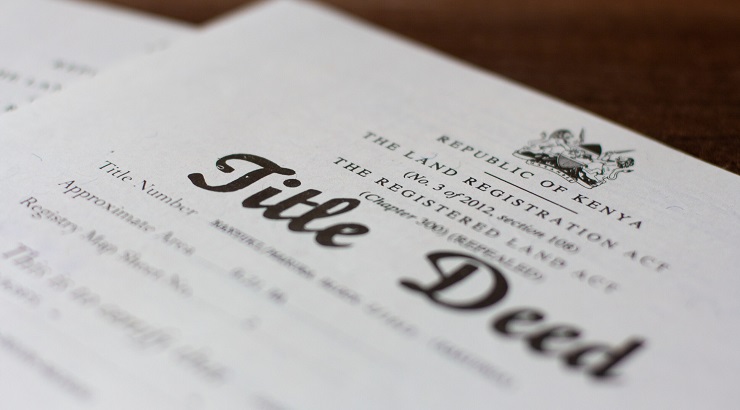
The official search is a certificate from the land registry stating the registered owner, the size and any encumbrances on the title: charges (loans), cautions, restrictions or inhibitions. In Nairobi, Murang’a and other onboarded areas it is done on Ardhisasa (opens in a new tab); elsewhere through the county land registry.
The name, ID and parcel number on the search must match the seller and the sale agreement exactly. Check the seller’s ID and KRA PIN in person; if the seller is a company, ask for a recent CR12 showing its directors and confirm that whoever signs has the board’s authority. Searches go out of date quickly, so your advocate should run a fresh one just before completion. Our guide to verifying a title deed covers the checks in detail.
5. Sign the sale agreement through your advocate
The sale agreement sets the price, the deposit, the payment schedule, the completion date, what happens if either side defaults, and the documents the seller must hand over. Have your own advocate review it before you sign or pay anything.
Pay only into the account named in the agreement, never cash to an individual, and keep every receipt.
6. Consents, clearances and valuation
Before the transfer can be registered, the paperwork has to be complete. Depending on the plot, that usually means:
- Land Control Board consent for agricultural land, applied for within six months of signing the sale agreement: without it the sale is void.
- Land rent clearance for leasehold land, and rates clearance from the county.
- Spousal consent where the land is matrimonial property.
- A valuation for stamp duty, assessed by a government valuer (your advocate arranges it).
7. Pay stamp duty and register the transfer
Stamp duty is assessed on the higher of the price and the valuation, and paid to the Ministry of Lands through Ardhisasa (opens in a new tab) and eCitizen (since November 2023 it is no longer paid through KRA). Your advocate then lodges the signed transfer, the clearances and the duty receipt at the land registry.
Once registered under the Land Registration Act (opens in a new tab), the land is legally yours and a new title, or certificate of lease, is issued in your name. Ask for the time this usually takes at that registry before you sign, as it varies around the country.
Capital gains tax (15% of the seller’s gain) is the seller’s to pay, not yours; the land registry usually asks for proof of payment before it registers the transfer.
Questions buyers ask
- Can I buy land in Kenya without a lawyer?
- You can, but it is not wise. An advocate checks the title, drafts or reviews the sale agreement, handles consents and stamp duty, and registers the transfer. Their fees are a small fraction of what a bad title would cost you.
- What is the first thing to check before buying land?
- The official search. It tells you who the registered owner is and whether the title carries any charge, caution or restriction. Do not pay a deposit until it is clean and matches the seller.
- How long does it take to buy land in Kenya?
- A straightforward cash purchase of land in a town can complete in a few weeks. Agricultural land needing Land Control Board consent, or a registry with a backlog, can take a few months. Ask for the expected timeline before you sign.
Ready to see it for yourself?
See land for saleGeneral guidance for buyers in Kenya, not legal advice. Fees and procedures change: confirm the figures for your purchase with your advocate.